

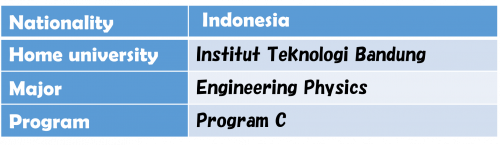
Participating in the CAMPUS Asia 6 student exchange program at the University of Tsukuba has been one of the most meaningful academic and personal experiences in my life. This program did not only broaden my academic perspective, but also reshaped how I view research culture, international collaboration, and my long-term career goals. Through academic exposure, cross-cultural interactions, and daily life experiences in Japan, I gained insights that I intend to apply directly to my future research and professional path.
One of the most important aspects of this exchange program was the opportunity to interact closely with professors who are experts in their fields. I was fortunate that my mentor, Professor Takeaki Sakurai, works in a research area that is closely related to my own interest, namely perovskite solar cells. This alignment allowed me to gain a deeper understanding of how advanced research in this field is conducted in a leading research environment. I regularly attended group meetings held every Friday, where I observed how Professor Sakurai discussed research progress with his students in an open and relaxed atmosphere. Despite the informal tone, the discussions were highly scientific, critical, and productive. There was no strong hierarchical barrier between professor and students, which encouraged active discussion and the exchange of ideas.
From these meetings, I learned the importance of creating a healthy research culture where students feel comfortable expressing opinions and asking questions. In my future research career, I would like to adopt this approach, whether as a graduate student, researcher, or future academic. I believe that high-quality research does not only depend on advanced equipment, but also on an environment that promotes mutual respect, curiosity, and collaboration.
Another valuable experience was meeting fellow students from various countries and universities, including Japan, Korea, China, Thailand, and Malaysia. Interacting with students from different academic and cultural backgrounds helped me understand how diverse perspectives can enrich scientific discussions. Each student brought unique ideas, problem-solving approaches, and research experiences shaped by their home institutions. This experience strengthened my ability to communicate in an international academic setting and made me more confident in collaborative research. In the future, I hope to actively engage in international research collaborations, as global challenges such as renewable energy development require collective efforts across borders.
This exchange program also allowed me to compare research facilities in Japan and Indonesia. Research infrastructure in Japan is significantly more advanced and complete, especially in materials science and energy research. Although I was unable to conduct material synthesis due to the lack of certification required to work independently at NIMS, I still had the opportunity to perform characterization measurements such as UPS and XPS. This experience was extremely valuable, as it allowed me to understand advanced characterization techniques and data interpretation directly from a professional research environment. In the future, I plan to use this experience as a foundation to improve my technical skills and to contribute to strengthening research capacity when I return to Indonesia or work in international institutions.
Beyond academics, living in Japan provided many memorable life experiences. I experienced a clean environment, fresh air, and a society that values discipline and order. Japanese people were generally kind and helpful, even though daily life sometimes involved complicated administrative procedures and strict regulations. However, these challenges taught me patience, responsibility, and adaptability. I believe these soft skills are essential for a successful research career, especially when working in international environments with different systems and expectations.
I also had the chance to visit several famous places in Japan, such as Mount Fuji, Nikko, Tokyo, Gala Yuzawa Ski Resort, and Kamakura. Experiencing traditional and modern Japanese culture firsthand, watching the Tsuchiura fireworks festival, fishing in Hitachi, and exploring different cities helped me maintain a healthy balance between academic life and personal well-being. These experiences reminded me that productivity in research is closely linked to mental health and cultural enrichment.
Overall, this exchange program strengthened my motivation to pursue an academic and research-oriented career. I now have a strong desire to continue my doctoral studies in Japan if an opportunity arises in the future, or to conduct postdoctoral research here to further sharpen my research skills in perovskite solar cells and renewable energy technologies. The experience at the University of Tsukuba has given me a clear vision of the researcher I want to become: scientifically rigorous, open to collaboration, culturally sensitive, and globally minded.
Riding the Enoden Line in Kamakura felt like stepping into a childhood anime scene. What once inspired me as a
kid now reminds me that small moments during this exchange quietly shaped my dreams for the future.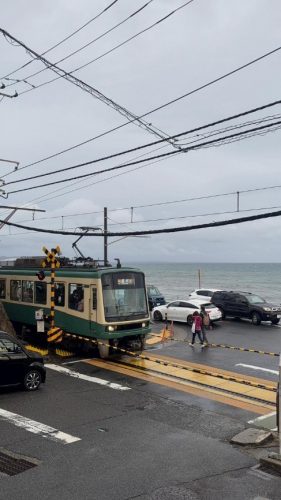
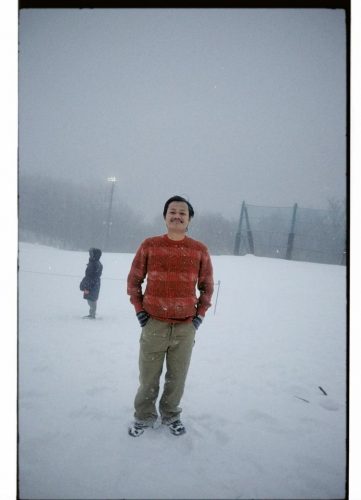
My first time seeing and touching snow at Gala Yuzawa. Pure happiness, unforgettable laughter, and a memory that will stay with me for a lifetime